Hjallastefnan Árbær – Selfoss, Iceland
Hjallastefnan Árbær is a preschool in Selfoss, South Iceland, operating according to the educational philosophy of Hjallastefnan, with a strong focus on equality, democracy, creativity, independence, and positive relationships.
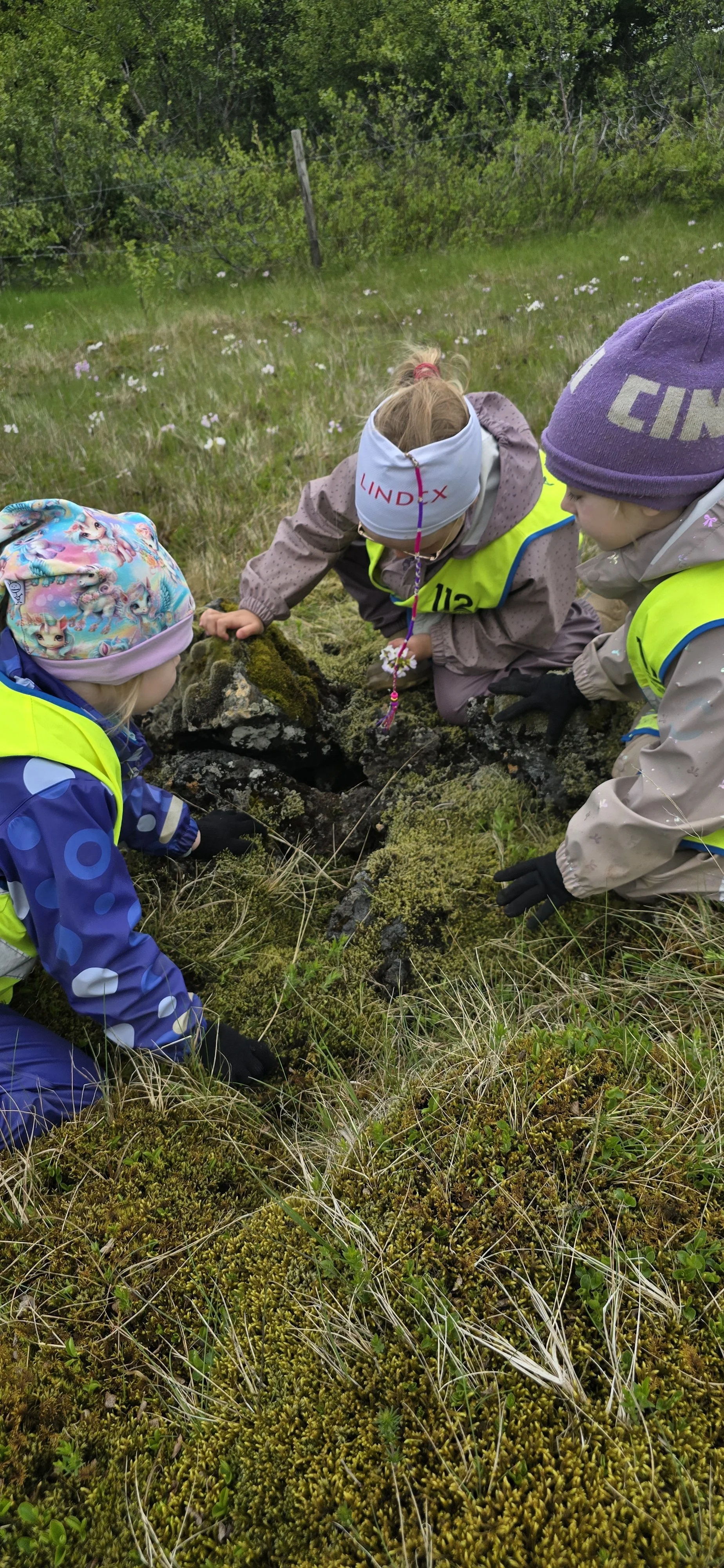
A central part of Árbær’s approach is nature-based and outdoor education. Nature and the outdoor environment are viewed as important learning spaces where children can explore, create, move, take appropriate risks, solve problems, and build meaningful relationships with the natural world. Natural and open-ended materials, water and mud, gardening, building, outdoor cooking, fire, ropes, and large loose parts support children’s curiosity, creativity, physical development, confidence, and resilience.
Árbær is also officially recognized as a Gaia School, reflecting its commitment to sustainability, regenerative education, and whole-school approaches to learning. Sustainability is integrated into everyday practice, connecting children’s relationships with themselves, one another, their community, and the natural environment.
This nature-based and regenerative approach is closely connected to Hjallastefnan’s emphasis on gender equality and social development. The learning environment is intentionally designed to give all children opportunities to develop independence, empathy, courage, creativity, cooperation, and a strong sense of belonging.
Árbær is a developing learning community where children and educators learn together through play, nature, relationships, reflection, and experience.
Árbær pre-school was shaped not by fixed plans, but by weather, seasons, children’s ideas, and relationships. From frozen winter mornings to warm summer gatherings, our learning unfolded in response to what nature and the children brought to us each day.
Working within Hallstead has reminded us again and again that children are capable, thoughtful, and deeply connected to their environment when they are trusted. Our role has been to listen, to prepare spaces, to ensure safety, and then to step back enough for learning to truly happen. Whether around a fire, holding a tool, resting in a hammock, or walking through town, children showed responsibility, care, and confidence when given real experiences.
Nature has been our most consistent teacher. It asked us to slow down in winter, to build and take risks in spring, to celebrate and connect in summer, and to return to rhythm and care in autumn. We saw how children regulated themselves through movement, rest, and shared rituals, and how community—families, colleagues, visitors—became an essential part of learning.
We hope this documentation serves as inspiration for teachers—not as a model to copy, but as an invitation to listen more closely, trust more deeply, and allow learning to emerge. Rooted in Hjallastefna, this work reflects our belief that education is at its best when it is human, relational, and connected to the living world.
In behalf of Árbær Team
With Gratitude and Love
María Ösp and Margarita / Maru
